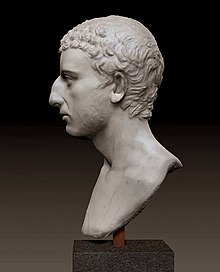
In doing research for my forthcoming article on the first-century Jewish historian Josephus, I was struck at how revered he is in the writings of the Church Fathers. I knew of course that Eusebius relies on him in parts of his
Ecclesiastical History, as well as sings his praises. What I found particularly interesting was the commentary of the ninth century patriarch of Constantinople, St. Photios the Great, in his still extant
Bibliotheca (which can be read in part
here). Because my article deals with the differences between Josephus'
Life and
Jewish War, the references to Josephus by St. Photios are very important. Here's why:
Josephus'
Life is at least in some form written as a response to the account of the Jewish Revolt of AD 66-70 by his rival, Justus of Tiberias. Unfortunately, Justus' account is now lost to us. This is where St. Photios comes in: His
Bibliotheca is essentially an annotated bibliography of 279 works he has read with a paragraph giving a summary (and his opinion!) of each. One of the works included is Justus of Tiberias'
Chronicle of the Kings of the Jews. This just happens to be the latest extant writer we know to have read Justus' work. And he was not particularly fond of it, in contrast to his estimation of Josephus' works, which he characterizes as having "a pure style...apt at expressing his meaning with dignity, with distinctness and charm."
Reading this, it got me thinking about how many times I had read fond appraisals of Josephus in the early Church Fathers. I noticed he is credited in my copy of
The Great Collection of the Lives of the Saints among "the teachers, historians, and chroniclers from whose works this book was compiled." In fact, I wonder if there is any non-Christian writer more highly regarded by early Christian writers than Josephus.
I find this interesting, particularly when I read some who state that "what really happened" in the Scriptural narratives is unimportant to Orthodox theology. Why would a non-Christian historian be held in such revere by so many Church Fathers if this were so?