Wednesday, February 26, 2014

Back Next Week (hopefully)


I apologize to my readers for not posting anything in the last two weeks. My wife and I welcomed two beautiful twin girls into the world on Feb. 11th, and since then have had our hands full with everything except sleep. Both Mom and the girls are healthy, thank God, and our son is adjusting wonderfully. 

Stay tuned for more posts beginning next week when I discuss the "major discrepancy" (according to some articles) discovered in the Bible a few weeks ago. See you then!

Thursday, February 6, 2014

What I'm Reading - G. Ernest Wright's God Who Acts: Biblical Theology as Recital

A brief excerpt from a classic OT scholar and archaeologist:

"Yet when all has been said about the comparison of the literature of Israel with the other literatures of the Near East, the most obvious difference is the one most rarely touched upon: that is the peculiar Israelite attention to historical traditions. The Biblical point of view is concentrated, not merely on the individual exploits of heroes and kings, not merely on court annals like the Babylonian Chronicle which were especially important for the calendar and the royal archives, but rather on the unity and meaningfulness of universal history from the beginning of time until the end of time. It is in the framework of this universal history that the chronicles of individual events are set and ultimately receive their meaning."

- G. Ernest Wright, God Who Acts: Biblical Theology as Recital (London: SCM), 39.


Tuesday, February 4, 2014

An Orthodox Appreciation for Josephus

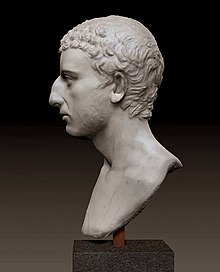
Josephusbust.jpg

In doing research for my forthcoming article on the first-century Jewish historian Josephus, I was struck at how revered he is in the writings of the Church Fathers. I knew of course that Eusebius relies on him in parts of his Ecclesiastical History, as well as sings his praises. What I found particularly interesting was the commentary of the ninth century patriarch of Constantinople, St. Photios the Great, in his still extant Bibliotheca (which can be read in part here). Because my article deals with the differences between Josephus' Life and Jewish War, the references to Josephus by St. Photios are very important. Here's why:

Josephus' Life is at least in some form written as a response to the account of the Jewish Revolt of AD 66-70 by his rival, Justus of Tiberias. Unfortunately, Justus' account is now lost to us. This is where St. Photios comes in: His Bibliotheca is essentially an annotated bibliography of 279 works he has read with a paragraph giving a summary (and his opinion!) of each. One of the works included is Justus of Tiberias' Chronicle of the Kings of the Jews. This just happens to be the latest extant writer we know to have read Justus' work. And he was not particularly fond of it, in contrast to his estimation of Josephus' works, which he characterizes as having "a pure style...apt at expressing his meaning with dignity, with distinctness and charm."

Reading this, it got me thinking about how many times I had read fond appraisals of Josephus in the early Church Fathers. I noticed he is credited in my copy of The Great Collection of the Lives of the Saints among "the teachers, historians, and chroniclers from whose works this book was compiled." In fact, I wonder if there is any non-Christian writer more highly regarded by early Christian writers than Josephus.

I find this interesting, particularly when I read some who state that "what really happened" in the Scriptural narratives is unimportant to Orthodox theology. Why would a non-Christian historian be held in such revere by so many Church Fathers if this were so?

Thursday, January 30, 2014

What I'm Reading - N. T. Wright's The New Testament and the People of God

Last year was a big year for fans of N. T. Wright, who finally released his book Paul and the Faithfulness of God (Fortress Press), the fourth of his six-volume Christian Origins and the Question of God series. Though I don't agree with him on everything, I highly recommend N. T. Wright to anyone unfamiliar with his work.

It's been ten years since his previous volume in the series, so rather than rush out to purchase Paul and the Faithfulness of God, I decided to re-read the first three volumes, beginning with The New Testament and the People of God. This is my third or fourth time reading it, and it is very edifying each time I do so.

So often, biblical scholars seemingly arbitrarily declare certain things to be historical and others not without any discussion of their criteria or methodology. It's not uncommon to read a scholar saying, for instance, that a particular saying or action of Jesus in the canonical gospels is "clearly" a later creation of early Christians rather than something that Jesus actually said or did without any substantive discussion of how they came to this conclusion. Such a discussion, by the way, must begin not with an analysis of the evidence, but with a discussion of the nature of knowledge itself (epistemology), and within this discussion, of the nature of historical knowledge. Then we can move on to criteria, methodology, and finally, an analysis of the evidence.

In this regard, it has become fashionable among many theologians today to deny that there is such a thing as reliable historical knowledge when it comes to a figure such as Jesus of Nazareth, since everyone will inevitably view Him through some particular lens. The problem with this is that all of history - indeed, all of reality - is viewed through some particular lens. That does not by any means indicate that nothing can be known about events and people of the past.

Against both of these tendencies, Wright begins his New Testament and the People of God (and hence the entire Christian Origins and the Question of God series) with the most detailed discussion of historiography, historical epistemology, and historical method that I have seen in any New Testament scholar, save perhaps Ben F. Meyer. (For a good discussion of these matters by OT scholars, see A Biblical History of Israel by Iain Provan, V. Philips Long, and Tremper Longman [Westminster John Knox: 2003].)

The position he argues for is called critical realism. Against a "naive realism" in which a reader assumes an event to have occurred exactly as it is recorded in a particular document (such as the canonical gospels), critical realism takes into account the complex factors that come into play when we investigate events and people of the past (which I touch upon here) while at the same time recognizing that it is possible to investigate and to know certain things about the past.

Here is an excerpt:

"In a good deal of modern literary criticism...there is so much emphasis on the text apart from the author, and indeed on the reader apart from the text, that any idea that one might be reading a text which referred to something beyond itself looks so wildly ambitious that it is left out of consideration entirely - at least in theory, and at least when convenient. But this seems to me fundamentally counter-intuitive. The most convinced deconstructionist will still trace back the ancestry of this movement to Foucault, Nietzsche, Saussure or whoever. And to those for whom the study and writing of history is their everyday concern, the qualms of postmodernism will seem incredibly, almost impossibly, over-cautious, shy and retiring. We simply can write history. We can know things about what has happened in the past." (p. 81)


Tuesday, January 28, 2014

An ancient proposed solution to a modern problem


We often hear both from biblical and patristic scholars that a great dichotomy exists between "pre-critical" and "critical" exegetes of the Scriptures. The Enlightenment would probably be the usual dividing line separating the two in the minds of these scholars. There is much truth to this, as can be observed not only in the methodology of biblical scholarship over the past 250 years, but also of the questions asked of the text. For instance, I don't know of any Church Father who spends much time discussing the sources used to comprise the synoptic gospels, while every modern commentary on Matthew, Mark, or Luke is expected to somehow address the "synoptic problem."

And yet just when we get comfortable with this pre-critical/critical dichotomy, we run into problems if we neglect to read the commentators of the past, assuming that they have nothing to tell us about our modern questions posed to the text, or perhaps even that our questions are somehow superior to their questions simply because they are modern. Hence, more and more scholars today are turning to exegetes of ages past - those like St. John Chrysostom who did not learn Greek at a graduate school in the West, but spoke it as their primary language - to help understand what the NT authors meant.

Every once in awhile, however, when we read the Church Fathers, we see that they were not wholly unaware of problems that would later occupy the minds of post-Enlightenment biblical scholars, nor were they without proposed solutions to these problems.

This became clear to me in my research last summer for an independent study I did with Prof. Ruth Anne Reese on exilic themes in 1 Peter. One question wrestled with by modern scholars is the ethnic makeup of the recipients of this general epistle, whom the author identifies as "exiles/strangers (parepidemois) of the diaspora" (1 Peter 1:1). Are these diaspora Jews who happen to be Christian? Are they Gentile Christians whom the author is intentionally identifying with the history of Israel so as to emphasize their identity as the People of God? Or is it an ethnically mixed audience, and is the ethnic makeup of the recipients unimportant to Peter, as there is no longer Jew or Gentile in Christ (cf. Gal. 3:28)?

It is not uncommon in commentaries on 1 Peter for scholars to note a shift in opinion from early Christian exegetes to modern NT scholars, with the former assuming that the recipients are Jewish Christians, and the majority of scholars today (with a few notable exceptions) believing the recipients to have been Gentile converts from paganism. The main reason for the disagreement is Peter's addressing his recipients as "Israel" on the one hand while the language used to describe the recipients' pre-conversion lives on the other gives the impression that they were former pagans. Would an early Christian really go so far as to describe the pre-Christian life in Judaism as characterized by passions of ignorance (1:14)? Or would an author clearly appealing to the imagery of Israel consider pre-Christian Israelite traditions to have been a "worthless way of life" (1:18)? These questions, in addition to the references to immoral conduct associated with paganism (4:2-4; cf. 2:9) cause most scholars to opt for (at least predominantly) a Gentile audience.

Without here proposing a solution to this problem, I want to draw attention to at least one Church Father who was aware of it and the creative solution he proposes. The eighth century British Church Father known as the Venerable Bede stands out from other early Christian commentators on the NT epistles in his choice of which epistles to comment upon. Whereas most chose to focus on Paul's epistles, Bede wrote commentaries on each of the Catholic Epistles (1-2 Peter; 1-3 John; James; Jude). While many commentators today simply list his opinion of the recipients as Jewish Christians in a footnote, his answer to this question is actually more complex than this. Here it is:

The word used to identify Peter's recipients in 1 Peter 1:1 is parepidemos. This is translated in various modern English translations as "exile," "pilgrim," "stranger," "resident alien," etc. Bede translates it as "newcomer," i.e. convert. He notes the opinion of the great western Father St. Jerome that the letter's recipients were "of the circumcision." However, Bede uniquely argues that these recipients were in fact Gentile former pagans who had first fully converted to Judaism (hence making them "of the circumcision" and truly newcomers or converts), then became Christians after hearing Peter preach. This explains both the references to the addressees as Israel and the apparent references to the recipients' pagan past.

I would not say that I find this argument convincing, but it is certainly brilliant and shows that at least in Bede's case, pre-critical commentators were not wholly unaware of some of the problems with which critical scholars would later wrestle.


Thursday, January 23, 2014

What I'm Reading - William J. Abraham's Canon and Criterion in Christian Theology

As I've noted, part of the focus of this blog is to focus on the intersection between (especially Orthodox) theology and history. Last week, I briefly discussed R. G. Collingwood's classic book The Idea of History in response to those theologians who tend to downplay the reality, much less the relevance, of historical knowledge. 

This week, I wanted to offer a brief excerpt from the other end of the spectrum. There is a tendency at times among biblical scholars to focus so much on a proper historical understanding of the scriptural text that they completely reject any type of ecclesial reading. When it is pointed out to such scholars that the books of the New Testament constitute a canon precisely because the Church of the fourth century canonized them, the response is often that they merely put their stamp of approval on books that were already accepted as being historically reliable. This is certainly true (contra Dan Brown) when it comes to gnostic works like the Gospel of Thomas, but it completely ignores works such as the Shepherd of Hermas that were in fact included in various canons prior to the fourth century, as well as the fact that books like Hebrews, 2 Peter, and Revelation were absent in some of these same canons.

An excellent book that deals with the problem of the canon of Scripture and how it is used by Christians is William J. Abraham's Canon and Criterion in Christian Theology (Oxford: Oxford University Press, 1998). Here is an excerpt worth considering:

"Construing the canon of Scripture as a criterion [for ethics] may drastically diminish what it means to perceive Scripture as canonical. The impression given in this interpretation is that the provision of the canon of Scripture is the provision of a criterion to settle contested questions. Properly deployed, that is, in the context of a serious claim about diving revelation, it can indeed so be used...However, even in the field of morality, this use, if it is deployed exclusively, ignores important claims about the place of conscience in the moral life, about the connection between divine commands and human welfare, and about the relation between obedience and freedom." (p. 6)

He goes on elsewhere to discuss the important point that the Scriptures were never the only thing the early Church canonized. It also canonized an ecclesiastical calendar, iconography, liturgy, saints, canon laws, etc. I don't believe that we should interpret the Scriptures apart from the broader theological tradition of the Church; however, I don't see this to be necessarily at odds with a good historical reading of the text. 

What do you think?


Tuesday, January 21, 2014

My first academic publication in my field - Stay tuned!

I received some good news over the weekend (in the midst of a bit of discouragement from my ongoing job search): My first academic article in my field has been accepted for publication and will be out later this year. The journal that is publishing it will have it available online for awhile, so once it is published, I will post a link. Here's a bit of background info on the article:

Throughout the 20th century, scholars debated the literary genre of the gospels. Prior to that, they had always been assumed to be biographies. St. Justin Martyr refers to them as "memoirs of the apostles." Memoirs would be a sub-type of biography. However, in the 19th century, scholars started to notice differences between the gospels and modern biographies. For instance, none of the gospels have much to say about the majority of Jesus' life, but focus almost entirely on the last three years of his life. This caused many to use the term "sui generis," or original genre, in reference to the gospels, meaning that they don't really fit into any other genre, but are instead their own unique genre.

Based on this understanding, many scholars further reasoned that because the gospels are not biographies, we should not expect biographical information from them about Jesus as we would from a biography. Rather, the gospels were written for specific communities to meet the needs of those communities. So if Matthew, for instance, traces Jesus' genealogy back to Abraham, that was to answer a question or argument that had arisen about Jesus in the community for which he was writing. This is how differences between the gospels were often accounted for in the last century.

This thinking was challenged in the late 20th century by a number of scholars, but the person who pretty much settled the argument about the gospels' genre was a classicist named Richard Burridge who compared the gospels to other ancient biographies and found that that's what they were - ancient biographies. That's how they would be read/heard by someone who had never heard of Jesus before. They don't share a lot of traits with modern biographies not because they are not biographical, but because they are not modern. But many ancient biographies, for instance, do not recount more than a few years of a person's life - the few years that matter most to what the author wants to communicate.

So now that the biographical genre is established, what about that second point of reasoning mentioned above? That we should not expect biographical information about Jesus, but rather authors reading their community's experience back into the life of Jesus. Richard Burridge - the classicist mentioned above - said that his findings directly challenge this, and I agree: If they are biographies, we absolutely should expect to find biographical information, and our focus should be about the subject of the biography - Jesus - and not about some hypothetical later community reading its experiences back into the life of Jesus.

The response to this realization, however, has been interesting from some scholars who concede now that the gospels are in fact ancient biographies, but that this does not matter because ancient biographers just made things up about their subjects to please their audiences. One of my professors, Craig Keener, challenged this in an article by looking at material on the Roman Emperor Otho. We have information written about him from three ancient sources - two biographers and one historian - within about the same lapse of time as between Jesus' death and the composition of the canonical gospels. If these skeptical scholars are correct that ancient biographers just made things up, there should be very little correspondence between the two biographies and one historical work dealing with this Roman emperor. What he found was the exact opposite - most of the material between the three sources was in agreement about Otho. It's possible that the information is incorrect, but it is absolutely not true that either of these two biographers just made things up about their subject, because if they did, there would be no correspondence between their works.

In my article, I tried to come at the subject from a different angle. The first century Jewish historian Josephus, who wrote around the same time as the gospel writers, wrote an autobiography, as well as a history of the Jewish revolt (in which the Temple was destroyed) which contained overlapping material with his autobiography, as he participated in the revolt, then switched sides and fought with the Romans. The problem is that much of the autobiographical material in the two works conflict with one another. So whereas my professor argued in his article that ancient biographers did not necessarily just make things up about their subjects using Suetonius as a test case, I argued from the opposite end of the spectrum using Josephus, at times a sloppy historian, whose own autobiographical works contradict one another, to try to begin to determine the outer range of variation that would have been expected by ancient readers from biographical works. 

Stay tuned for a link to the article when it is published in the coming months...

In the meantime, if you are interested in any of the above, I highly recommend the following books:


Thursday, January 16, 2014

What I'm Reading - R. G. Collingwood's The Idea of History

It is not uncommon today to hear from theologians regarding events depicted in the Scriptures that we can't know what really happened. Many go further, asserting that it really does not matter what really happened, for instance, in Jesus' resurrection. This would shock many traditional Christians of previous generations, but this perspective resonates well with our current postmodern culture. Over against any attempt to understand what really happened historically with any given event depicted in the Scriptures, theologians often today say that what really matters is simply our experience of the risen Lord today.

Part of the reasoning behind this perspective is the nature of history itself. As children, we grow up learning history as a massive set of facts to memorize, much the same way we memorize our times tables and vocabulary words. However, at some point along the way, we realize that history is an altogether different animal than other subjects we learn about, such as chemistry and mathematics. These subjects are based on experiment and observation, while history has to do with things that have already happened and, hence, are unable to be experimented upon or observed.

There is further the problem of perspective and the fragmentary nature of history. Even if someone witnesses an event, he only witnesses it from one angle and colored by his own worldview. When he later recalls it, he does so through the lens of his (perhaps changed) worldview, and what he recalls is subject to his faulty memory. He also crafts his narrative in a certain way in telling the story of what happened, usually leaving out certain details even of what he remembers if they seem unnecessary to his narrative. And then there is the problem of the worldview, prejudices, and faulty memory of those who hear the narrative and pass it on to others.

And of course there is the fragmentary nature of evidence. I don't think anyone would deny that an infinite number of "events" occur in any given moment, the vast majority of which leave no trace of evidence behind for a historian to reconstruct what really happened. So, postmodern theologians say, with history being so unreliable, why even ask what really happened in any given event depicted in the Scriptures? Who knows, and who cares? What matters is my present experience of Christ as risen Lord now.

I will discuss some theological problems with this perspective in future posts, but for now I will focus on what I believe to be the basic problem of being consistent while holding this position. I would not deny any of the above about the problems posed by historical knowledge. However, if we really believe that all of the above makes historical knowledge impossible, then to be consistent, we would immediately cease and desist from making any authoritative statements about the past, even about events that happened just a moment ago. Nor would we react to any events that have occurred, even just a moment ago, for to do so would be to rely on our faulty historical knowledge. I personally have not seen any theologian who talks of the unreliability of history be this consistent.

It may surprise some to know that these problems of historical knowledge are not new to historians and philosophers of history. However, rather than simply write off all historical knowledge as unreliable, many of these scholars have taken the time to wrestle with what sort of knowledge historical knowledge is, and how we can know things about the past.

For a great introduction to this debate, R. G. Collingwood's The Idea of History, written nearly 90 years ago, remains a classic text well worth considering. Collingwood essentially sees all history as the history of thought. This immediately raises objections from postmodern thinkers. It is difficult enough to know anything about the inner thoughts of someone when she is openly sharing them with us. How can we know anything about the thoughts of someone who lived thousands of years ago?

Yet that is the difficult task of the historian, according to Collingwood. As he classically expresses it, it is never enough for the historian to note that Caesar's blood was spilled on the senate floor. The historian wants to know why this happened. And the only way to give an explanation is to deal with the thoughts of the actors involved. Collingwood realizes the impossibility of knowing all that there is to know about an event, much less about all the inner thoughts of any given person. However, he counters the extreme opposite of this pendulum swing, which postmodern theologians and philosophers would do well to consider: the idea that we can know nothing about events that occur or even thoughts of past persons.

This post should not be seen as a complete endorsement of all Collingwood's thoughts. In the time since he's written, much valuable criticism has been offered of his perspective. I will not now go into my own criticisms now of him. However, I do consider this book to be a good place to start in trying to understand the nature of historical knowledge and the task of the historian. Despite the problems of historical knowledge noted above, we do live in a space-time continuum in which real events do occur which continually shape our present and future. And it is simply not true that we cannot have any real knowledge about any of these events.

That's my perspective, but I am interested in hearing yours. Please comment, especially if you have read or thought at all about the problem of historical knowledge.



Tuesday, January 14, 2014

Ramping up for 2014

Over the past year, I have been posting somewhat sporadically on this blog, mostly about topics related to my field of specialty - Biblical Studies. My purpose for starting this blog was initially to simply share my thoughts about this and that (hence the title) and to become more disciplined about writing regularly. As I pursue my studies, one of my goals is to publish books and articles in a number of fields, but especially related to Biblical Studies. In looking back at this blog over the previous year, it does not seem that I was particularly successful in being a disciplined writer, as my posts were sporadic with months at times going by without any updates.

But appearances can be deceiving. In December I graduated from Asbury Theological Seminary with a Master of Arts degree in Biblical Studies. Over the past year, I have actually been a very disciplined writer, producing several hundred pages of research papers for my classes. This prevented me from dedicating the amount of time I would have liked to this blog.

Now that I have graduated, one of my goals is to develop this blog into a website that readers find useful and entertaining to read. I'm narrowing the scope of the site to focus on the intersection of history and theology (particularly Orthodox theology) in the interpretation of Scripture. This is a topic I feel strongly about for several reasons:


  • There is a general sense of biblical illiteracy among Christians, especially those of my own Eastern Orthodox tradition.
  • There are very few Orthodox biblical scholars in the world today. That means on the one hand that Orthodox Christians are not exposed to the historical and cultural contexts of the Scriptures, while on the other that many non-Orthodox Christians (as well as non-Christians for that matter) are not exposed to the ways the Scriptural texts are illuminated by the deep well of Orthodox theology, as expressed through patristic interpretation, liturgy, iconography, and holy tradition.
  • In general, many scholars and lay students of the Bible overemphasize either theology or history at the expense of the other. Within my own ecclesial tradition, it seems to me that there is a general tendency among theologians today, in the spirit of postmodernism, to completely neglect the historical dimensions of the Scriptures for the sake of theology. I agree with N. T. Wright on the topic: What God has joined together let no man put asunder. I am convinced that we cannot divorce theology from history as Orthodox Christians.

In the coming months, look for the following from this site:


  • Each Tuesday, a post examining some topic related to the intersection of theology and history in scriptural interpretation.
  • Each Thursday, a "What I'm Reading" post, consisting either in a short review or a brief excerpt from books/articles that I'm reading related to the focus of the site.

I hope you all enjoy what I have to say, and I'd love to hear from you in the Comments section of each post.

See you Thursday...